DailyWall
A gratitude journal is a notebook or app where you regularly write down things you’re thankful for. To start, pick a time (bedtime works well), write three good things that happened today and add why each one happened. Use gratitude journal prompts when your list starts to repeat, and keep each entry short so you can do it every day.
Gratitude journal prompts are the easiest way past the moment every gratitude journal hits sooner or later: you open it, write “family, health, coffee” for the tenth night in a row, and wonder why you’re bothering. A good prompt points your attention somewhere new. Below you’ll find what a gratitude journal is, how to start one in five minutes, 75 prompts grouped by situation (everyday, for adults, Thanksgiving, hard days, kids and families), a 30-day plan, gratitude list ideas and the small tricks that keep the habit going. With Thanksgiving on November 26 this year, it’s a good week to start.
What is a gratitude journal, and how do you start one?
A gratitude journal is simply a place where you write down things you’re thankful for, usually a few lines at a time. It can be a paper notebook, a gratitude journal diary with printed pages or your phone; doing it regularly matters more than the format.
There is real research behind the idea. In a well-known 2003 study, psychologists Robert Emmons and Michael McCullough asked people to keep short weekly lists of things they were grateful for, while other groups wrote about hassles or neutral events. The gratitude group tended to feel better about their lives overall. Later, Martin Seligman and colleagues popularized the “three good things” exercise. Effects in studies are generally modest and differ from person to person, so think of gratitude journaling as a gentle way to train attention, not a cure for anything. It isn’t a replacement for real support when life is heavy.
Here’s the five-minute method most people can keep up:
Tick the steps as you go
Everyday gratitude journal prompts (1–15)
Use these daily gratitude journal ideas on ordinary days. They’re quick to answer and push you toward details, which is where gratitude journaling gets interesting.
Tick the steps as you go
Gratitude prompts for adults (16–34)
These gratitude prompts for adults go a little deeper: work, relationships, health, money, the past and the person you’re becoming.
Tick the steps as you go
Thanksgiving journal prompts (35–52)
Thanksgiving journal prompts help you slow down during a busy, food-filled week. Use them in the days before November 26 or as conversation starters at the table. Many also work for reflecting on the whole year.
Tick the steps as you go
Gratitude prompts for hard days (53–62)
Gratitude doesn’t mean pretending things are fine. On difficult days, forcing three cheerful items can feel fake. These smaller prompts look for something steady, not something shiny. It’s okay to skip journaling entirely on the worst days.
Tick the steps as you go
Gratitude prompts for kids and families (63–75)
Kids rarely want to “journal,” but most like answering a good question at dinner or bedtime. Ask one of these out loud and let younger children draw their answer. Older kids can write a line or two. Everyone answering the same prompt often works better than a solo journal.
Tick the steps as you go
A 30-day gratitude journal plan
If an open list feels too loose, follow this plan: one focus per day for a month. Each entry takes five minutes or less.
Tick the steps as you go
Gratitude list ideas: what to be thankful for
A gratitude list is the quick cousin of a journal: no full sentences, just things you’re thankful for. These gratitude list ideas, sorted by category, help when your mind goes blank. Choose one category per night.
Tick the steps as you go
Tips that make a gratitude journal stick
Most gratitude journals don’t fail because people run out of things to be grateful for. They fail because the entries get repetitive or the notebook disappears into a drawer. These habits help:
Tick the steps as you go
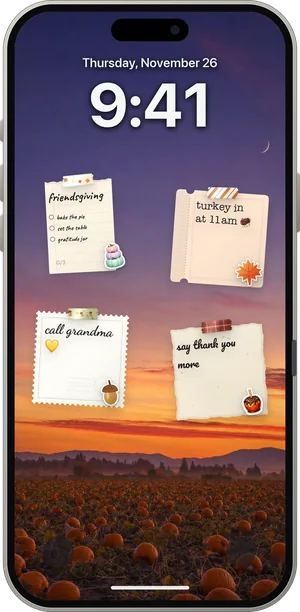
Keep today’s prompt on your Lock Screen with DailyWall
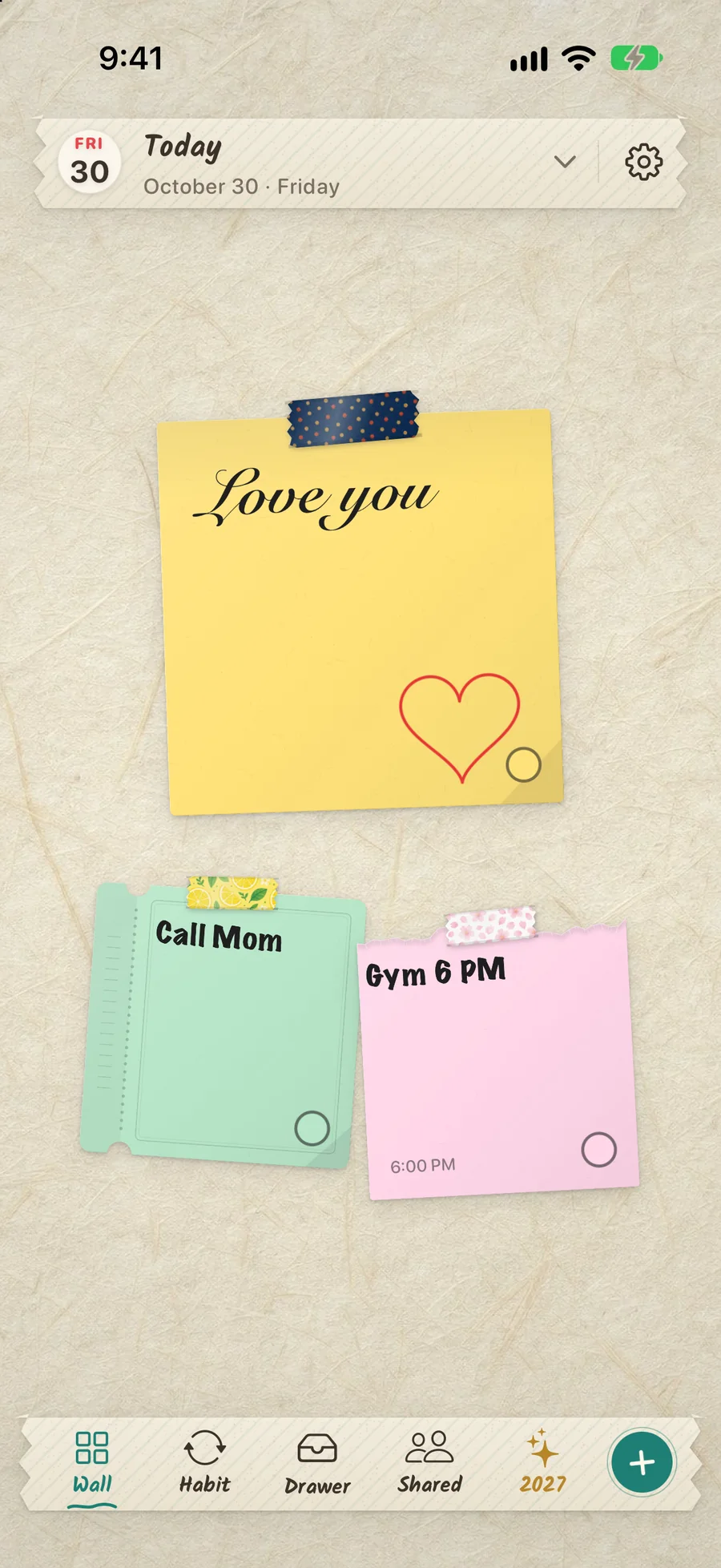
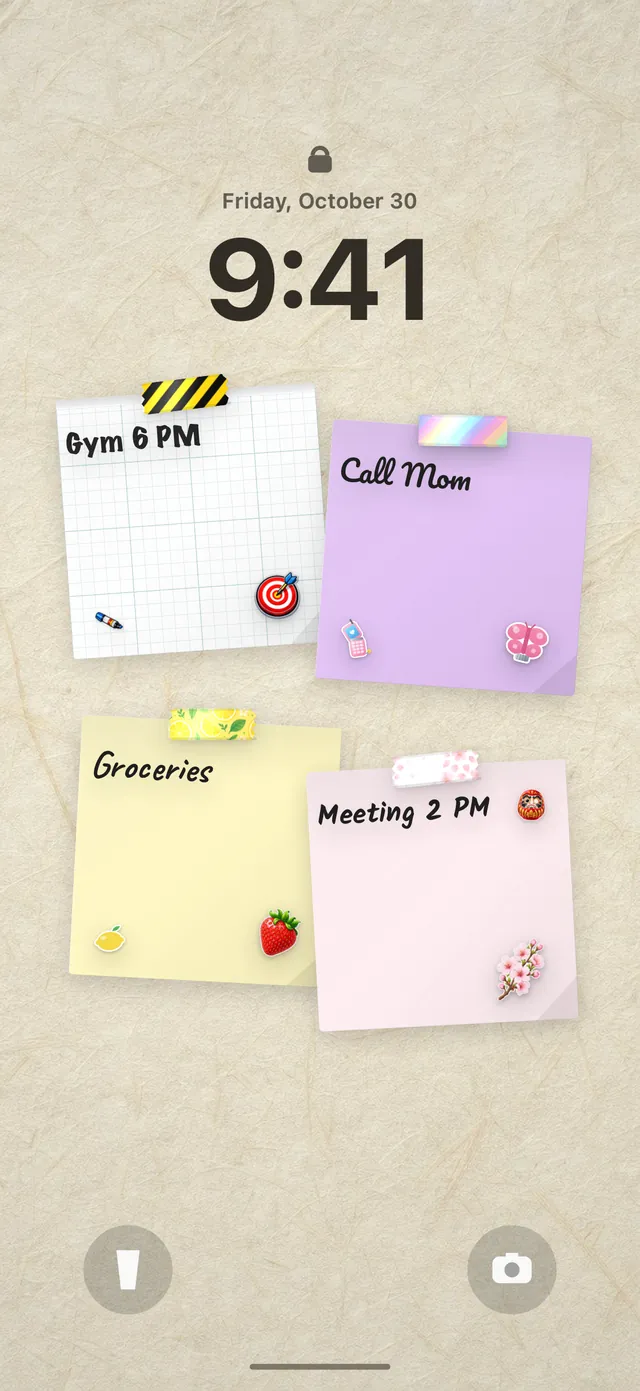
The hardest part of any journal is remembering it exists at 10 p.m. DailyWall is an iPhone and iPad app where each day has its own wall of paper notes, and that wall can become your Lock Screen wallpaper through a Shortcuts automation you set up once. Write tonight’s prompt on a paper and it’s the first thing you see when you pick up your phone.
There’s also a Gratitude note habit. It hangs a small paper on your wall each day with one dot for each good thing you want to write, from one to five (three by default), and you tap a dot after each one. Our gratitude journal habit page walks through the setup and why the small version works, and the journaling habit page covers longer entries.
Tick the steps as you go
Questions people ask
What should I write in a gratitude journal?
Write three specific good things from your day and why each happened. If your entries start repeating, use a prompt, such as “Who made today easier?” or “What did I enjoy that I usually ignore?”
How do I start a gratitude journal?
Pick a notebook or your phone, choose a fixed time like bedtime, and write three good things with a short “because” for each. Keep it to five minutes so it’s easy to repeat.
Should I write in my gratitude journal every day?
Daily works for many people, but it isn’t required. If daily entries start to feel automatic, writing a few times a week with more detail can keep gratitude feeling fresh.
What are good gratitude prompts for adults?
Try “What do I have now that I once hoped for?”, “Who believed in me before I did?” and “What did I learn from a failure that I wouldn’t trade back?”. Prompts about people and the past tend to go deeper.
What are good Thanksgiving journal prompts?
Ask what you’re most thankful for compared with last year, who you want to thank and what you’d say, which family tradition you hope never disappears, and what you want to remember about this Thanksgiving.